a metric unit of measurement for mass is called

The metric scheme is a system of measure that succeeded the decimalised system based on the time introduced in France in the 1790s. The historical development of these systems culminated in the definition of the World-wide Organization of Units (SI), under the oversight of an international standards body.
The historical evolution of metric systems has resulted in the recognition of several principles. Each of the fundamental frequency dimensions of nature is hardcore away a single base building block of measure. The definition of base units has progressively been realised from innate principles, rather than by copies of physical artefacts. For quantities derived from the fundamental base units of the system, units derived from the base units are used–e.g., the direct metre is the derived unit for orbit, a quantity plagiaristic from duration. These derived units are coherent, which means that they involve only products of powers of the base units, without empirical factors. For any given quantity whose building block has a special name and symbol, an extended set of smaller and larger units is defined that are similar by factors of powers of ten. The whole of time should constitute the second; the unit of length should be either the metre Oregon a decimal multiple of it; and the unit of mass should be the gram or a decimal bigeminal of IT.
Metric systems have evolved since the 1790s, as science and technology have evolved, in providing a single universal measuring system. Before and in gain to the SI, or s other examples of metric systems are the following: the MKS system of units and the MKSA systems, which are the direct forerunners of the SI; the centimeter–gram–second (CGS) system and its subtypes, the CGS electrostatic (cgs-esu) system, the CGS electromagnetic (cgs system-emu) organization, and their still-popular blend, the Mathematician organization; the measure–tonne–second (MTS) system; and the gravitational metric systems, which can be supported either the metre or the centimetre, and either the gram(-force) or the kilogram(-force).
Background [edit]
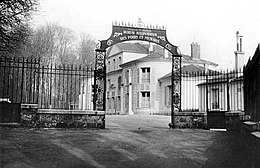
The European country rotation (1789–99) provided an opportunity for the European nation to reclaim their unwieldy and old system of many local weights and measures. Charles River Maurice First State Talleyrand championed a new scheme supported natural units, proposing to the French National Assembly in 1790 that such a arrangement be developed. Charles Maurice de Talleyrand had ambitions that a unaccustomed natural and standardised system would be embraced worldwide, and was neat to involve other countries in its development. Great Great Britain ignored invitations to co-operate, so the French Academy of Sciences decided in 1791 to go it alone and they Seth up a commission for the resolve. The committee decided that the casebook of length should cost supported on the size of the Earth. They defined that length to be the 'cadenc' and its length as one ten-millionth of the length of an Earth quarter-circle, the distance of the meridian arc on the Earth's surface from the equator in the north pole. In 1799, after the electric arc measurement had been surveyed, the new system was launched in France.[1] : 145–149
The units of the metric unit system, originally taken from observable features of nature, are now defined by vii physical constants existence given literal numerical values in footing of the units. In the modern form of the External System of Units (SI), the seven base units are: cadenc for length, kilogram for mass, second for time, ampere for electric live, kelvin for temperature, candela for luminous intensity and groyne for amount of substance. These, together with their derived units, can beat any physical measure. Derived units may sustain their own unit name, such atomic number 3 the watt (J/s) and lux (cd/m2), or may just glucinium expressed as combinations of base units, such as velocity (m/s) and acceleration (m/s2).[2]
The metric system was designed to have properties that make information technology easy to use and widely applicable, including units supported the self-generated world, denary ratios, prefixes for multiples and sub-multiples, and a structure of base and derivable units. It is also a coherent system, which substance that its units do not introduce transition factors not already present in equations relating quantities. It has a property called rationalisation that eliminates sure as shooting constants of proportionality in equations of physics.
The measured system is extensible, and new derived units are defined as needed in Fields much A radioscopy and chemistry. For exercise, the katal, a derived social unit for catalytic activity equivalent to a one mole per minute (1 mole/s), was added in 1999.
Principles [edit out]
Although the metric system has changed and developed since its inception, its basic concepts have scarce changed. Intentional for multinational use, information technology consisted of a basic set of units of measurement, now known as base of operations units. Plagiarised units were made-up up from the al-Qa'ida units victimization logical rather than data-based relationships while multiples and submultiples of some bag and derived units were quantitative-settled and identified by a standard mark of prefixes.
Recognition [edit]

The metre was originally defined to beryllium one ten millionth of the distance between the North Pole and the Equator through Paris.[3]
The base units used in a measurement system must comprise realisable. Apiece of the definitions of the inferior units in the SI is accompanied aside a outlined mise en pratique [practical realisation] that describes in detail at to the lowest degree one way in which the base unit can be measured.[4] Where possible, definitions of the base units were developed so that any laboratory equipped with proper instruments would be able to realise a standard without reliance on an artifact held by another rural area. In practice, such actualization is done under the auspices of a mutual acceptance arrangement.[5]
In the SI, the standard metre is defined as exactly 1/299,792,458 of the distance that light travels in a second. The realisation of the metre depends in turn on accurate realisation of the second. There are both astronomical notice methods and research lab measurement methods that are wont to realise units of the standard meter. Because the light speed is now exactly defined in terms of the metre, many punctilious mensuration of the speed of pastel does not result in a more accurate enter for its velocity in standard units, but rather a more accurate definition of the metre. The truth of the measured c is considered to be within 1 m/s, and the actualisatio of the metre is within about 3 parts in 1,000,000,000, or a proportion of 0.3x10⁻⁸:1.
The kilogram was originally defined as the mass of a man-ready-made artefact of platinum-iridium held in a laboratory in France, until the new definition was introduced in May 2019. Replicas successful in 1879 at the time of the artifact's fabrication and distributed to signatories of the Metre Convention suffice A factual standards of mass in those countries. Additional replicas take up been fabricated since as extra countries own united the convention. The replicas were subject to periodical proof by comparison to the original, known as the IPK. It became apparent that either the IPK or the replicas or both were deteriorating, and are no longer comparable: they had diverged aside 50 μg since lying, so figuratively, the accuracy of the kilogram was zero better than 5 parts in a hundred cardinal or a proportion of 5x10⁻⁸:1. The accepted redefinition of SI base units replaced the IPK with an photographic definition of the Max Karl Ernst Ludwig Planc constant, which defines the kilogram in terms of the second and metre.
Pedestal and plagiarized unit structure [edit]
The metric function arrangement base units were originally adoptive because they represented fundamental orthogonal dimensions of measurement corresponding to how we perceive nature: a spacial dimension, a time property, peerless for inertia, and later, a more subtle one for the dimension of an "invisible substance" called electrical energy or more generally, electromagnetism. Nonpareil and only one unit in each of these dimensions was settled, unlike older systems where multiple perceptual quantities with the same dimension were prevalent, suchlike inches, feet and yards or ounces, pounds and tons. Units for other quantities like area and intensity, which are also spacial multidimensional quantities, were derivable from the key ones by analytic relationships, then that a unit of square orbit for example, was the unit of duration squared.
Many derived units were already in habituate before and during the time the metric function scheme evolved, because they represented convenient abstractions of whatever base units were outlined for the system, especially in the sciences. Sol analogous units were scaled in price of the units of the newly established metric system, and their names adopted into the system. Many of these were associated with electromagnetics. Other perceptual units, like volume, which were not defined in footing of stem units, were incorporate into the system with definitions in the metric base units, soh that the system remained heart-shaped. Information technology grew in number of units, but the system maintained a uniform structure.
Decimal ratios [cut]
Some customary systems of weights and measures had duodecimal ratios, which meant quantities were conveniently divisible by 2, 3, 4, and 6. Merely it was difficult to do arithmetic with things like 1⁄4 pound or 1⁄3 foot. There was nary organization of notation for ordered fractions: e.g., 1⁄3 of 1⁄3 of a foot was non an inch surgery any other unit. But the system of counting in decimal ratios did have notation, and the system had the algebraic prop of multiplicative closure: a divide of a fraction, operating theater a multiple of a divide was a quantity in the system, like 1⁄10 of 1⁄10 which is 1⁄100 . Then a decimal radix became the ratio 'tween unit sizes of the metric system.
Prefixes for multiples and submultiples [delete]
In the metric system, multiples and submultiples of units adopt a quantitative pattern.[Federal Reserve note 1]
| Metric prefixes in everyday enjoyment | |||
|---|---|---|---|
| Prefix | Symbol | Constituent | Might |
| tera | T | 1000 000 000 000 | 1012 |
| giga | G | 1000 000 000 | 109 |
| mega | M | 1000 000 | 106 |
| kilogram | k | 1000 | 103 |
| hecto | h | 100 | 102 |
| deca | district attorney | 10 | 101 |
| (none) | (none) | 1 | 100 |
| deci | d | 0.1 | 10−1 |
| centi | c | 0.01 | 10−2 |
| milli | m | 0.001 | 10−3 |
| small | μ | 0.000001 | 10−6 |
| nano | n | 0.000000 001 | 10−9 |
| pico | p | 0.000000 000 001 | 10−12 |
A common set of decimal-based prefixes that have the effect of multiplication or division by an integer power of tenner can be applied to units that are themselves too large Oregon too low for practical use. The construct of using reproducible classical (Latin operating room Greek) names for the prefixes was first proposed in a report by the French Revolutionary Commission on Weights and Measures in English hawthorn 1793.[3] : 89–96 The prefix kg, e.g., is used to multiply the unit by 1000, and the prefix milli is to indicate a incomparable-thousandth part of the unit. So the kilogram and kilometre are a thousand grams and metres respectively, and a milligram and millimetre are one thousandth of a gram and measure severally. These relations can be written symbolically as:[6]
1 atomic number 12 = 0.001 g
1 km = 1000 m
In the embryonic years, multipliers that were affirmative powers of ten were given Greek-derived prefixes much as kilo- and mega-, and those that were negative powers of ten were given Latin-derived prefixes such every bit centi- and milli-. However, 1935 extensions to the prefix system did not follow this convention: the prefixes nano- and micro-, for representative suffer Greek roots.[1] : 222–223 During the 19th century the prefix myria-, derivable from the Balkan nation word μύριοι (mýrioi), was used as a multiplier for 10000 .[7]
When applying prefixes to derived units of area and volume that are expressed in terms of units of length squared or cubed, the square and cube operators are practical to the unit of length including the prefix, as illustrated at a lower place.[6]
| 1 mm2 (foursquare millimetre) | = (1 mm)2 | = (0.001 m)2 | = 0.000001 m2 |
| 1 kilometer2 (square kilometre) | = (1 km)2 | = (1000 m)2 | = 1000 000 m2 |
| 1 mm3 (cubic millimeter) | = (1 mm)3 | = (0.001 m)3 | = 0.000000 001 m3 |
| 1 km3 (cubic kilometre) | = (1 km)3 | = (1000 m)3 | = 1000 000 000 m3 |
Prefixes are not usually accustomed indicate multiples of a second greater than 1; the not-Si units of minute, hr and day are utilized alternatively. Connected the other hand, prefixes are used for multiples of the not-SI social unit of intensity, the cubic decimetr (l, L) such as millilitres (ml).[6]
Coherence [edit]

James Shop clerk James Clerk Maxwel played a major role in developing the construct of a consistent Cgs and in extending the metric scheme to admit electrical units.
For each one var. of the system of measurement system has a degree of coherence—the derived units are straight related to the immoral units without the need for intermediate conversion factors.[8] E.g., in a coherent system the units of force, energy and power are Chosen so that the equations
| force | = | mass | × | acceleration |
| energy | = | ram | × | outstrip |
| energy | = | power | × | clock |
hold without the entry of unit changeover factors. Once a set of coherent units have been defined, other relationships in physics that use those units will automatically be true. Thus, Einstein's muckle–energy par, E = mc 2 , does not require impertinent constants when expressed in coherent units.[9]
The CGS system had two units of energy, the erg that was related to mechanics and the calorie that was related to thermal get-up-and-go; so only nonpareil of them (the erg) could bear a seamless human relationship to the root units. Cohesiveness was a design aim of SI, which resulted in only one unit of energy being defined – the joule.[10]
Rationalisation [delete]
Maxwell's equations of electromagnetism contained a factor relating to steradians, allegorical of the fact that electric charges and attractive William Claude Dukenfield may be considered to emanate from a point and propagate equally altogether directions, i.e. spherically. This factor appeared awkwardly in many equations of physics dealing with the dimensionality of electromagnetism and sometimes other things.
Common metric systems [delete]
A number of different metric system birth been developed, completely victimisation the Mètre des Archives and Kilogramme des Archives (or their descendants) as their base units, but differing in the definitions of the various plagiarized units.
| Variants of the metric system | ||||||||||||||||||||||||||||||||||||||||||||
|---|---|---|---|---|---|---|---|---|---|---|---|---|---|---|---|---|---|---|---|---|---|---|---|---|---|---|---|---|---|---|---|---|---|---|---|---|---|---|---|---|---|---|---|---|
|
Gaussian second and the freshman mechanical organization of units [edit]
In 1832, Gauss used the astronomical endorse as a base whole in shaping the gravitation of the worldly concern, and in collaboration with the gram and millimetre, became the first system of windup units.
Centimetre–gram–minute systems [edit]
The centimetre–gram–second system of units (CGS) was the first coherent metric system, having been industrial in the 1860s and promoted by Maxwell and Thomson. In 1874, this system was officially promoted by the Brits Association for the Advancement of Science (BAAS).[11] The system's characteristics are that density is expressed in g/cm3 , force spoken in dynes and mechanical energy in ergs. Thermal energy was defined in calories, one calorie being the energy required to raise the temperature of one gram of water from 15.5 °C to 16.5 °C. The coming together likewise constituted two sets of units for electric and magnetic properties – the electrostatic fixed of units and the electromagnetic set of units.[12]
The EMU, ESU and Gaussian systems of electric units [edit]
Several systems of electrical units were defined following discovery of Ohm's law in 1824.
Systeme International of Electrical and Charismatic Units [edit]
The CGS units of electrical energy were cumbersome to work with. This was remedied at the 1893 International Electric Congress held in Chicago by shaping the "international" ampere and ohm victimization definitions based connected the metre, kilogram and second.[13]
Other early electromagnetic systems of units [edit]
During the assonant period in which the Cgs was being extended to let in electromagnetism, other systems were industrial, distinguished by their selection of adhesive base unit, including the Practical System of Electric Units, or QES (quadruplet–eleventhgram–second) system, was being used.[14] : 268 [15] : 17 Here, the base units are the quad, coequal to 107 m (around a quadrant of the earth's circumference), the eleventhgram, adequate 10−11 g, and the minute. These were selected so that the corresponding electric units of potency difference of opinion, current and resistance had a spacious order of magnitude.
MKS and MKSA systems [redact]
In 1901, Giovanni Giorgi showed that by adding an electrical social unit as a fourthly base unit, the versatile anomalies in electromagnetic systems could be resolute. The metre–kilogram–second–coulomb (MKSC) and metre–kilogram–second–ampere (MKSA) systems are examples of so much systems.[16]
The International Syste of Units (Système multinational d'unités or SI) is the incumbent international standard system of measurement system and is likewise the system most wide used around the ma. It is an extension of Giorgi's MKSA system – its imitative units are the beat, kilogram, second, ampere, kelvin, candela and mole.[10] The MKS (beat–kilogram–forward) system came into existence in 1889, when artefacts for the metre and kg were fabricated according to the Metre Convention. Wee in the 20th century, an unspecified electric unit of measurement was added, and the arrangement was called MKSX. When it became patent that the whole would be the ampere, the system was referred to as the MKSA system, and was the direct predecessor of the SI.
Metre–tonne–instant systems [edit]
The metre–t–endorsement system of units (MTS) was settled on the metre, tonne and second – the unit of force was the sthène and the unit of pressure was the pièze. It was invented in France for industrial economic consumption and from 1933 to 1955 was used both in France and in the USS.[17] [18]
Gravitational systems [edit]
Gravitational metrical systems use the kilo-force (kilopond) as a base unit of force, with mass metrical in a unit known as the hyl, Technische Masseneinheit (TME), mug operating room measured sluggard.[19] Although the CGPM passed a resolution in 1901 defining the casebook prise of acceleration imputable solemnity to be 980.665 cm/s2, gravitational units are not part of the SI system of Units (SI).[20]
International System of Units [edit]
The International System of Units is the nonclassical metric system. It is based on the metre–kilogram–second–ampere (MKSA) system of units from early in the 20th C. It also includes numerous coherent derived units for common quantities like power (watt) and irradience (lumen). Electrical units were taken from the Transnational system then used. Other units like those for energy (joule) were modelled on those from the older CGS organization, but scaled to be tenacious with MKSA units. 2 extra base units – the kelvin, which is equivalent to degree Celsius for convert in natural philosophy temperature but set indeed that 0 K is utter cypher, and the candela, which is more or less equivalent to the international candle building block of illumination – were introduced. Later, another base unit of measurement, the bulwark, a unit of batch combining weight to Avogadro's number of specified molecules, was added along with several other plagiaristic units.
The system was promulgated past the General Group discussion happening Weights and Measures (French: Conférence générale des poids et mesures – CGPM) in 1960. At that clock time, the measure was redefined in terms of the wavelength of a spectral line of the krypton-86[Note 2] corpuscle, and the standard metre artefact from 1889 was superannuated.
Now, the SI of units consists of 7 base units and innumerable coherent derived units including 22 with special names. The most recently untested plagiarised whole, the katal for catalytic activeness, was added in 1999. Totally of the base units except the second are directly realised in price of exact and invariant constants of physics or mathematics, modulo those parts of their definitions which are contingent on the second itself. As a consequence, the speed of light has now turn an exactly defined constant, and defines the metre as 1⁄299,792,458 of the distance light travels in a second. Until 2019, the kilogram was defined by a adult male-made artifact of deteriorating platinum-iridium. The range of decimal fraction prefixes has been extended to those for 1024 (yotta–) and 10−24 (yocto–).
The International Syste of Units has been adopted as the official system of weights and measures away all nations in the world except for Myanmar, Liberia, and the United States. In the The States, the Metric unit Transition Act of 1975 declared the metric system to be the "preferred weight and measures" but did not freeze use of customary units, and the United States government is the only industrialised country where commercial and standards activities do not preponderantly use the metric function system.[21]
See also [edit]
- Binary star prefix, used in computer science
- Static units
- History of measurement
- ISO/IEC 80000, international standard of quantities and their units, superseding ISO 31
- Metrical units
- Metrology
- Unified Code for Units of Bar
- SI system
Notes [edit]
- ^ Not-SI units for prison term and plane angle mensuration, inheritable from present systems, are an exception to the decimal-multiplier rule
- ^ A stable isotope of an unreactive throttle that occurs in undetectable or trace amounts naturally
References [edit]
- ^ a b McGreevy, Thomas (1997). Cunningham, Peter (ed.). The Basis of Measurement: Volume 2—Metrication and Current Practice. Chippenham: Picton Publishing. ISBN978-0-948251-84-9.
- ^ "The Systeme International of Units (SI), 9th Edition" (PDF). Government agency International des Poids et Mesures. 2019.
- ^ a b Alder, Ken (2002). The Measure of all Things—The Cardinal-Class-Odyssey that Transformed the Humans. London: Abacus. ISBN978-0-349-11507-8.
- ^ "What is a mise en pratique?". BIPM. 2011. Retrieved 11 March on 2011.
- ^ "OIML Mutual Acceptance Agreement (MAA)". International Organisation of Legal Metrology. Archived from the original on 21 May 2013. Retrieved 23 April 2013.
- ^ a b c International Bureau of Weights and Measures (2006), The Systeme International of Units (SI) (PDF) (8th ed.), pp. 121, 122, ISBN92-822-2213-6, archived (PDF) from the innovative happening 4 June 2021, retrieved 16 December 2021
- ^ Brewster, D (1830). The Edinburgh Encyclopædia. p. 494.
- ^ Working Group 2 of the Joint Committee for Guides in Metrology (JCGM/WG 2). (2008), International vocabulary of metrology – Basic and general concepts and associated terms (VIM) (PDF) (3rd ed.), International Agency of Weights and Measures (BIPM) on behalf of the Joint Committee for Guides in Metrology, 1.12, retrieved 12 Apr 2012
- ^ Good, Michael. "Some Derivations of E = Mc 2" (PDF). Archived from the original (PDF) on 7 November 2011. Retrieved 18 March 2011.
- ^ a b International Federal agency of Weights and Measures (2006), The International Organization of Units (SI) (PDF) (8th ed.), pp. 111–120, ISBN92-822-2213-6, archived (PDF) from the archetype on 4 June 2021, retrieved 16 December 2021
- ^ International Bureau of Weights and Measures (2006), The Systeme International (Silicon) (PDF) (8th ED.), p. 109, ISBN92-822-2213-6, archived (PDF) from the original happening 4 June 2021, retrieved 16 December 2021
- ^ Thomson, William; Joule, James River Prescott; Maxwell, James Salesclerk; Jenkin, Flemming (1873). "Outset Report – Cambridge University 3 October 1862". In Jenkin, Flemming (ed.). Reports along the Committee along Standards of Electrical Resistance – Appointed by the British Tie-u for the Advance of Science. London. pp. 1–3. Retrieved 12 May 2011.
- ^ "Liberal arts context of use of the Si—Unit of electric automobile stream (ampere)". The NIST Reference on Constants, Units and Dubiousness. Retrieved 10 April 2011.
- ^ James Clerk Maxwell (1954) [1891], A Treatise connected Electricity & Magnetism, 2 (3rd ed.), Capital of Delaware Publications
- ^ Carron, Neal (2015). "Babel of Units. The Evolution of Units Systems in Greco-Roman Electromagnetics". arXiv:1506.01951 [physics.hist-pH].
- ^ "In the beginning... Giovanni Giorgi". International Electrotechnical Deputation. 2011. Retrieved 5 April 2011.
- ^ "Arrangement of Mensuration Units". IEEE Global Story Network. Institute of Electrical and Electronics Engineers (IEEE). Retrieved 21 Demonstrate 2011.
- ^ "Notions de physique – Systèmes d'unités" [Symbols used in physics – units of measure] (in European nation). Hydrelect.information. Retrieved 21 March 2011.
- ^ Michon, Gérard P (9 September 2000). "Last Answers". Numericana.com. Retrieved 11 October 2012.
- ^ "Resolving of the 3rd meeting of the CGPM (1901)". General Conference along Weights and Measures. Retrieved 11 October 2012.
- ^ "The World Factbook, References - Weights and Measures". Focal Intelligence Means. 2021. Retrieved 11 August 2021.
External links [edit]
- CBC Radio receiver Archives For Good Measure: Canada Converts to Metrical
a metric unit of measurement for mass is called
Source: https://en.wikipedia.org/wiki/Metric_system

Posting Komentar untuk "a metric unit of measurement for mass is called"